Sting’s song from 1987 is one of my favorites for sharing with groups. The lyrics are a reference to Quentin Crisp. Quentin Crisp lived from 1909 to 1999, and to understand the lyrics of Sting’s song you need to know that Quentin Crisp was ‘himself, no matter what they said’. He was a young homosexual man in the 20ies and 30ies of the 20th century, and did not hide it. He refused – or maybe just couldn’t – adhere to social norms of gender conformity. In that he was ‘the hero of the day’.
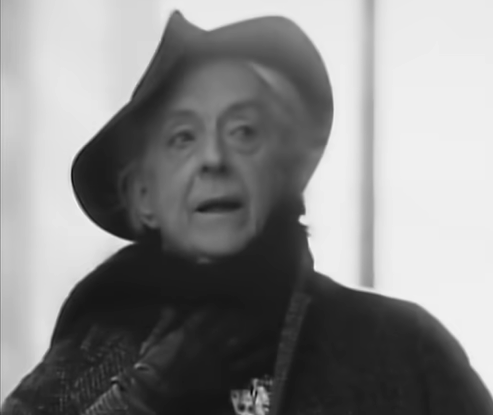
I always share the original video of the song, and the experience in my classes when doing so are all similar: None of my mostly German class members realizes that the lyrics relate to the person the camera moves onto frequently. They also believe him to be an older woman, not a man.
Let’s look at the lyrics first.
I don’t take coffee I take tea my dear
I like my toast done on one side
And you can hear it in my accent when I talk
I’m an Englishman in New YorkSee me walking down Fifth Avenue
A walking cane here at my side
I take it everywhere I walk
I’m an Englishman in New YorkI’m an alien, I’m a legal alien
I’m an Englishman in New York
I’m an alien, I’m a legal alien
I’m an Englishman in New YorkIf “manners maketh man,” as someone said
Then he’s the hero of the day
It takes a man to suffer ignorance and smile
Be yourself no matter what they sayI’m an alien, I’m a legal alien
I’m an Englishman in New York
I’m an alien, I’m a legal alien
I’m an Englishman in New YorkModesty, propriety can lead to notoriety
You could end up as the only one
Gentleness, sobriety are rare in this society
At night a candle’s brighter than the sunTakes more than combat gear to make a man
Takes more than a license for a gun
Confront your enemies, avoid them when you can
A gentleman will walk but never runIf “manners maketh man,” as someone said
Then he’s the hero of the day
It takes a man to suffer ignorance and smile
Be yourself no matter what they say
Be yourself no matter what they say
Be yourself no matter what they say(Repeats for several more lines)
At the age of 72, Quentin Crisp moved to New York City. In the video you see him ‘Walking down Fifth Avenue’, in other shots you see him sitting in a café, on a bench out on the street and in a small apartment. He is identified as ‘English’ in the first lines: ‘I don’t take coffee, I drink tea my dear, I like my toast done on one side.’ And you can hear his accent when he talks.
In the lines: ‘Takes more than combat gear to make a man,
Takes more than a license for a gun’ Sting questions concepts of masculinity. And ‘Be yourself, no matter what they say’ is a reflection of courage, to stand up for yourself in the face of enmity and violence from those who feel threatened by non-conformity.
Quentin Crisp wrote several biographies, his first in 1968: The Naked Civil Servant (Wikipedia). 1975 it was made into a comedy-drama film for television, starring John Hurt as Quentin Crisp. (Many might know John Hurt better as Mr Ollivander from the Harry Potter film series)
There are many sources, interviews on the internet, texts and books to research in order to get a better understanding of who Quentin Crisp was – his many facets, struggles, and thoughts that at times caused controversy and uproar among those who expected loyal solidarity for their causes.
Watch this last interview he gave in 1998.
Although he might have fantasized in retrospect on a life as a woman had he been given the opportunity, he didn’t. In his assumably last interview, he says he felt like a woman trapped in a male body and had there been the possibility, he would have gone through surgery and lived a quiet and inconspicuous life as a woman in the countryside. (Aint’t we glad he didn’t.)
I don’t think these words define who he was and the only reason I mention it is the wikipedia entry on him. Whoever wrote the article chose to refer to Quentin Crisp using forms of the female pronoun. Quentin Crisp never did that and to impose it onto him posthumously I find more than questionable.
I consider the verse below as one of the most important lines of Sting’s song.
If “manners maketh man,” as someone said
Then he’s the hero of the day
It takes a man to suffer ignorance and smile
Be yourself no matter what they say
‘Manners’ – treating others with respect and courtesy – were important to Quentin Crisp. Linguistically imposing one’s cause onto someone is ‘bad manners’, to say the least.
Quentin Crisp was an icon of courage and should not be ideologically usurped by anybody, especially not posthumously.